

By Nina Meier
Recently, Zürich’s city government published the first detailed analysis showing what people are actually throwing into the “Züri-Sack” and what ends up as bulky waste (“Sperrgut”). The findings give a rare glimpse into household habits—and where there’s room for improvement.
Key findings from the waste audit
The audit reviewed over 800 household rubbish bags and hundreds of bulky waste deliveries. It found that nearly 20% by weight of normal garbage consists of food that could’ve still been eaten. That is about 23.4 kilograms of edible food per person per year ending up in the rubbish. Alongside that, many recyclable materials and even usable objects show up in bulky waste, items that could have been reused. Also, the current recycling rate in Zürich stands at around 46%, and while this is solid, the ambition is to push it well above 50%.
City efforts & new steps
Zürich’s waste authority, ERZ (Entsorgung + Recycling Zürich), is taking several paths to respond. Among them:
- More awareness campaigns, especially around reducing food waste. Schools, public eateries and community groups are part of this outreach.
- A growing network of drop-off points and mobile recycling centres—by end of next year there should be 32 such facilities covering more neighbourhoods.
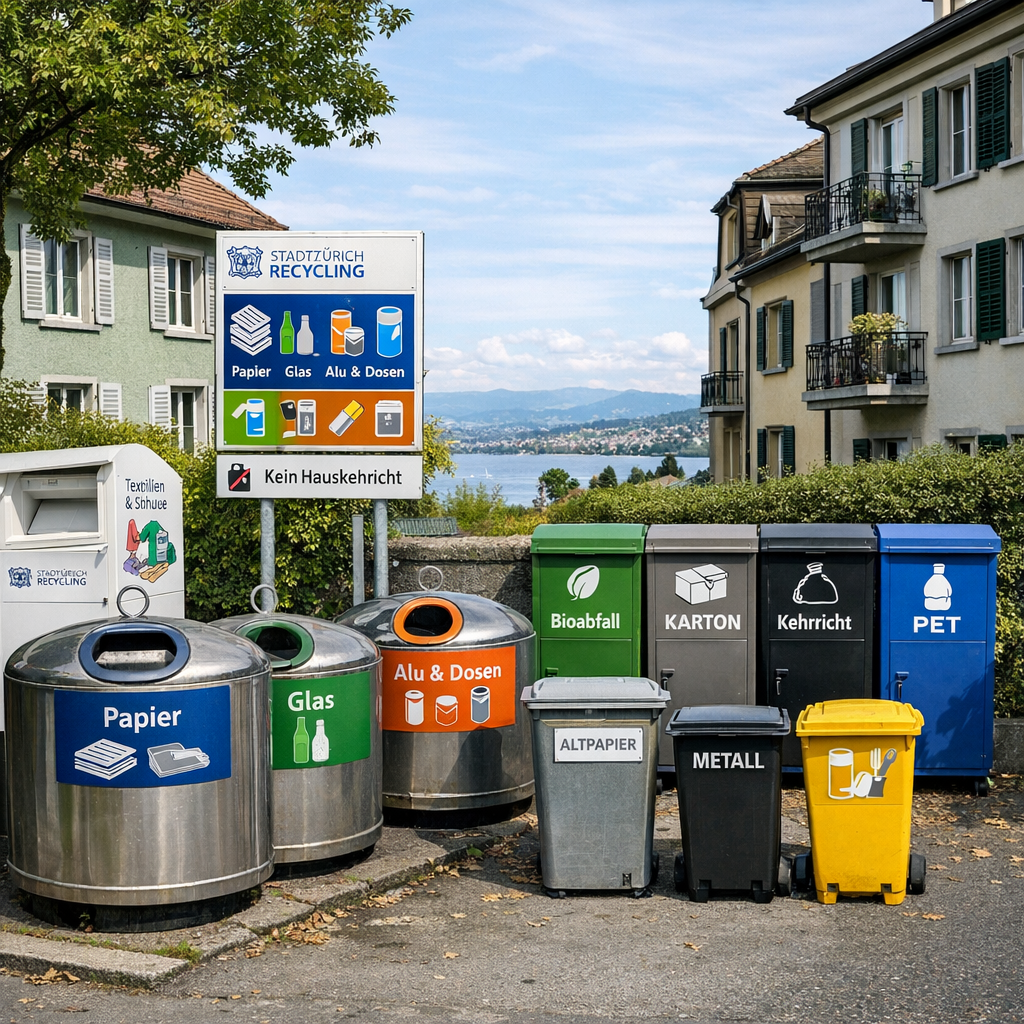
- Expanded sorting options: bio-waste pickup, more public recycling bins, new systems for plastics and cartons, and a renewed approach for clothing and textiles.
- New pilot programmes to support repair instead of disposal, and initiatives to pass on functioning items—via “bring and collect” days and local sharing platforms.
What you can do
As useful as city-led plans are, changes in households make the biggest difference. Here are some practical steps:
- Plan meals to buy only what you need; freeze or share leftovers rather than letting them spoil.
- Use the right bin: make sure recyclables and compostables go in the correct containers instead of in regular trash.
- Inspect bulk waste carefully—many things tossed away during clear-outs are still usable with small repairs.
- Support or organise your neighbourhood’s swap events or repair cafés—sharing skills can keep items in use longer.
- Stay informed—city meetings and updates often offer chances to give feedback or volunteer in local activities.
Long-term goals for a circular Zürich
The city’s broader strategy, “Circular Zürich,” aims not just to push recycling, but to fundamentally reduce how much waste is produced. That means businesses, builders, public institutions—and every household—have roles to play. A smaller footprint, less waste, more reuse is good for the environment, but also for the city’s livability and for your pocket.
Zürich already has strong infrastructure in place and a public eager to engage. If we each take one small step—plan better, sort smarter, choose reuse—Zürich can become a leader in waste reduction and circular living in Europe. It may be our trash, but together we carry its solutions too.